Burnout Recovery Coach and Workforce Performance Consultant Across the United States


Recover From Burnout Without Sacrificing Success
Helping professionals recover from burnout and helping organizations reduce workplace burnout through sustainable performance strategies that support long-term success.
For Professionals
For Organizations
Consultant • Speaker • Author • Trainer
Trusted Across Healthcare, Behavioral Health & Organizational Leadership
Burnout is No Longer an Individual Problem - It's a Workforce Performance Crisis
High-achieving professionals are exhausted.
Organizations are losing experienced employees faster than they can replace them.
Leaders are being asked to maintain performance inside systems that are no longer sustainable.
Workplace burnout affects...
Employee retention.
Organizational culture.
Leadership capacity.
Healthcare costs.
Productivity.
Long-term workforce stability.
The traditional model of success - pushing harder, working harder, and sacrificing personal well-being is breaking people and weakening organizations.
Sustainable performance requires a different apprach.
Trusted Burnout Recovery & Workforce Performance Expert

Deidre Gestrin
Consultant, Speaker, Author, & Trainer
With over 20 years specializing in stress, trauma, burnout recovery, and behavioral health leadership, Deidre Gestrin helps professionals and organizations create sustainable performance without sacrificing health, purpose, and people.
Deidre is also the author of:
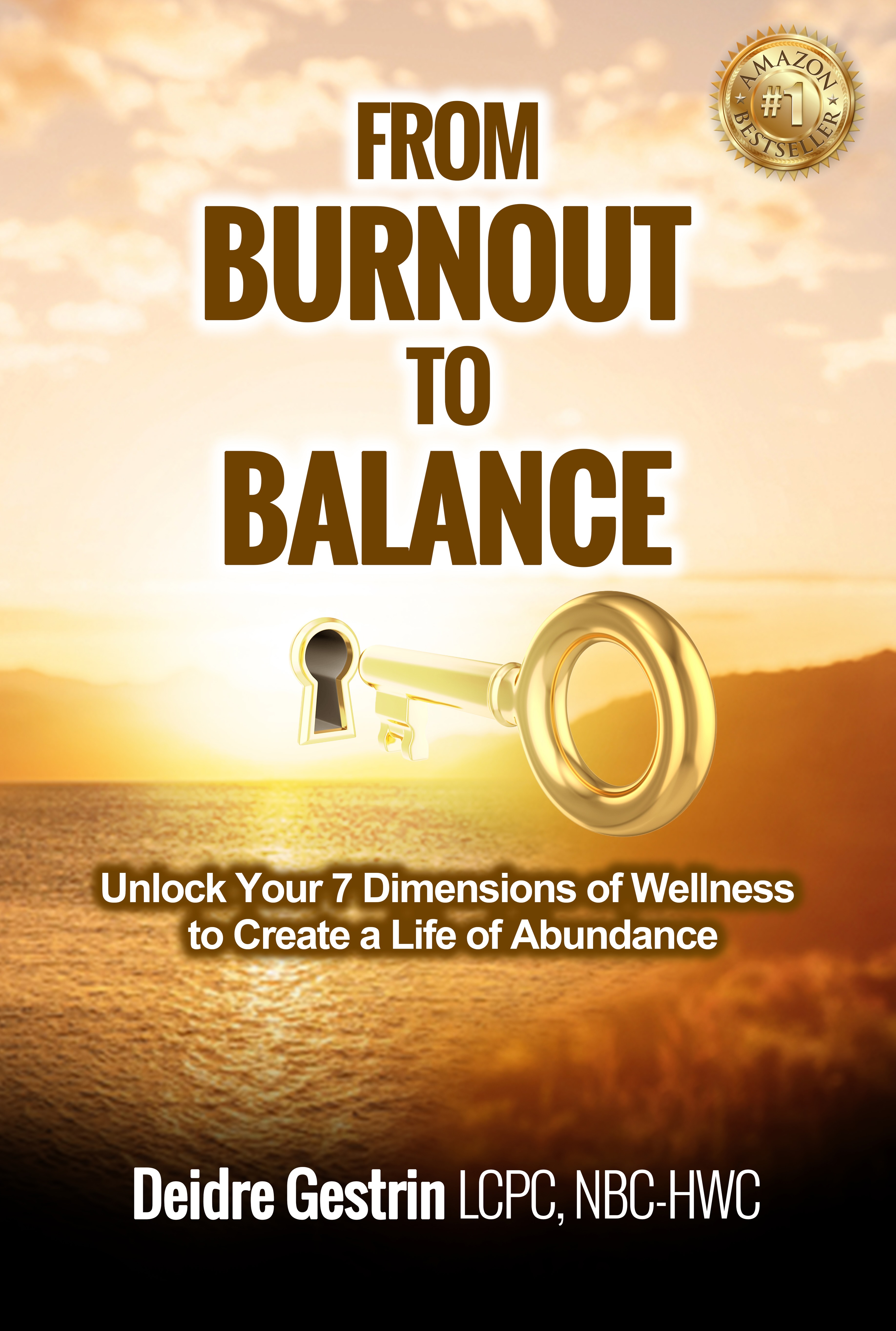
From Burnout to Balance: Unlock Your 7 Dimensions of Wellness to Create a Life of Abundance
Trusted Across Clinical and Organizational Settings
Experience includes behavioral health leadership with a focus on developing high-performing teams, strengthening workforce resilience, and enhancing clinical supervision.
Expertise in program design, system optimization, and telehealth enables scalable, efficient care delivery that supports both organizational performance and individual well-being.
Helping Professionals & Organizations Recover, Stabilize, and Perform Sustainbly
Healthcare professionals, executives, entrepreneurs, and high-achievers experiencing burnout, chronic stress, compassion fatigue, emotional exhaustion, loss of purpose, and work-life imbalance.
Healthcare and behavioral health organizations struggling with employee burnout, turnover, disengagement, unstable workforce performance, leadership strain, and rising operational costs.
High Pressure teams seeking healthier workplace culture, stronger communication, sustainable performance systems, leadership resilience, and workforce stability.
Burnout Recovery for High-Achieving Professionals
Burnout doesn't just affect your work.
It affects your energy, focus, relationships, sleep, health, and sense of purpose.

Through the The Sustainable Performance System™, professionals learn how to:
restore energy without stepping away from their career
regulate chronic stress and overwhelm
reconnect with purpose and clarity
create success without sacrificing their health or family
Organizational Burnout Consulting for Sustainable Workforce Performance
Burnout inside organizations leads to higher turnover, disengaged employees, leadership fatigue, increased insurance costs, and operational instability.

Through the The Sustainable Workforce System™, organizations learn how to:
strengthen leadership systems
improve team cohesion & reduce workforce burnout
stabilize operational performance
build healthier workplace culture
Real Results From Professionals & Organizations

"Deidre was able to help me get my clinical spark back!"
Beth Derickson
LCSW | Missouri

"I feel like I’m at a 90% success rate now."
Chris Grad
Business Owner, Entrepreneur | Idaho

"Deidre helped me get to the point where I am today."
Michelle Schmutzler
Psychiatric Tech Worker | Idaho
Sustainable Success Shouldn't Require Self-Sacrifice
Whether you're a professional trying to recover from burnout or an organization working to stabilize workforce performance, sustainable success is possible.
The Sustainable Performance System™
(Burnout Recovery for Professionals)
The Sustainable Workforce System™
(Organizational Consulting)
Don't Miss Out!
Workplace Burnout & Sustainable Performance Resources
Burnout in Leadership: Why High Performers Struggle Most
Burnout in Leadership: Why High Performers Struggle Most

Burnout in Leadership: Why Your Strengths Are Secretly Breaking You Down
Burnout is not a weakness problem, it's a performance problem. And if you're a high performer reading this, you need to understand something critical: you're not burning out despite your strengths, you're often burning out because of them.
The High Performer's Paradox
High performers share a common profile: exceptional standards, unwavering work ethic, and a profound sense of responsibility. Your identity becomes intertwined with competence. The more you deliver at work, the more validated you feel, and the more connected you become to being "the reliable one" or "the go-to person."
But here's what happens: internal pressure eventually eclipses external demands. What starts as external expectations transforms into an unstoppable internal drive to keep giving, keep doing, keep accomplishing. You begin to believe that rest must be earned. That you have to check off enough boxes before you're allowed to stop.
That belief persists until your system breaks.
Burnout in High Performers: The Whole-Person Impact
When we talk about burnout in leadership, we're discussing a whole-person breakdown. Your spirit, where purpose originates, drives your soul: your thoughts, emotions, and relationships. But the place where most people finally recognize burnout is in the physical body, often when it's already on the verge of being too late.
Your body will shut down if you force it to function under chronic stress for too long. High performers believe success overrides warning signals. We're conditioned to push through, to will ourselves to the finish line, ignoring every red flag our bodies wave.
The Warning Signs You're Ignoring
Pay attention to these common indicators of burnout in high performers:
Physical exhaustion that won't resolve. Constant body tension, poor focus that makes tasks take longer than they should, and persistent fatigue signal that you're operating beyond sustainable capacity.
Skipping lunch to get more done. If you're regularly eating at your desk or foregoing meals entirely to stay productive, you're displaying classic burnout behavior.
Abandoning your grounding activities. When you stop doing the daily practices that keep you connected to your body and peace, whether to create more working hours or because you're too exhausted, that's a critical warning sign.
The Invisible Burnout Loop
Here's the trap: high performers get rewarded for being the go-to person, which leads to more projects, more responsibility, and yes, sometimes more compensation. But the better you perform, the more load you absorb. You take on additional projects, tasks, and people to supervise.
When you solve every problem instead of questioning the system creating those problems, you establish a constant stress loop. You normalize burnout. You tell yourself, "This is just how it is."
This is where burnout becomes an invisible, repetitive cycle. You start to believe the lie that this level of stress is normal, even necessary.
The Hidden Costs of Leadership Burnout
Burnout doesn't happen suddenly, it's accumulative. It represents a fundamental misalignment between who you are as a person and how you're functioning professionally.
High performers miss the signs because on paper, everything looks fine. Outcomes remain intact. You appear successful. But there's a critical difference: you're functional, but you're not well.
Emotional exhaustion gets reframed as discipline. People call you dedicated when you're actually depleted.
Physical symptoms become normalized. "It's just part of the job" becomes the excuse for a body breaking under chronic stress.
Joy and creativity disappear. What once excited you now drains you, but this loss gets misinterpreted as maturity or leadership evolution.
Meanwhile, chronic stress rewires your brain, affecting focus, motivation, and resilience. Decision fatigue becomes your default state. You can force decisions at work but avoid them personally by ordering takeout instead of cooking, letting laundry pile up, choosing the path of least resistance in your personal life.
Your passion fades. Confidence wavers. Patience with employees, family, and yourself shrinks to nothing. Performance eventually drops, but usually only after health issues emerge, relationships suffer, or you completely isolate.
This is not sustainable leadership. This is not sustainable success.
Burnout Is a Systems Issue, Not a Character Flaw
Here's what leadership often gets wrong: burnout isn't just a personal failure. It's a systems problem, both organizational systems and your internal operating systems as a high-performing professional.
High performers need different recovery strategies than the general population. Rest is essential, but rest alone doesn't solve chronic overload. Your brain needs downtime to process the day's events, understand them, and release them. Your body needs recovery time just like muscles need rest after a workout to repair and grow stronger.
But to implement effective recovery, you must start with awareness. You cannot fix what you don't see and haven't named.
Creating a New System
The path forward isn't about slowing down, it's about creating systems that allow you to stay in the game long term. High performers I work with consistently say, "I know this is what I'm supposed to do, but I don't know how I'm supposed to keep going."
You don't need more grit. You need a better system.
Burnout is a signal, not a sentence. Stress is meant to come and go, not become your permanent state. When you create proper systems, you achieve sustainable performance without self-sacrifice. You rebuild energy, clarity, and capacity. You break the burnout cycle instead of just managing symptoms.
Burning out is not the price of success, and you don't have to prove anything by running yourself into the ground.
The question isn't whether you can keep going. The question is: what system will you create to thrive while you do?
Download your copy of Tips to Effectively Manage Burnout to get started on your internal system, today.

As Seen In


© 2026 Abundant Wellness Essentials. All Rights Reserved.