Burnout Recovery Coach and Workforce Performance Consultant Across the United States


Recover From Burnout Without Sacrificing Success
Helping professionals recover from burnout and helping organizations reduce workplace burnout through sustainable performance strategies that support long-term success.
For Professionals
For Organizations
Consultant • Speaker • Author • Trainer
Trusted Across Healthcare, Behavioral Health & Organizational Leadership
Burnout is No Longer an Individual Problem - It's a Workforce Performance Crisis
High-achieving professionals are exhausted.
Organizations are losing experienced employees faster than they can replace them.
Leaders are being asked to maintain performance inside systems that are no longer sustainable.
Workplace burnout affects...
Employee retention.
Organizational culture.
Leadership capacity.
Healthcare costs.
Productivity.
Long-term workforce stability.
The traditional model of success - pushing harder, working harder, and sacrificing personal well-being is breaking people and weakening organizations.
Sustainable performance requires a different apprach.
Trusted Burnout Recovery & Workforce Performance Expert

Deidre Gestrin
Consultant, Speaker, Author, & Trainer
With over 20 years specializing in stress, trauma, burnout recovery, and behavioral health leadership, Deidre Gestrin helps professionals and organizations create sustainable performance without sacrificing health, purpose, and people.
Deidre is also the author of:
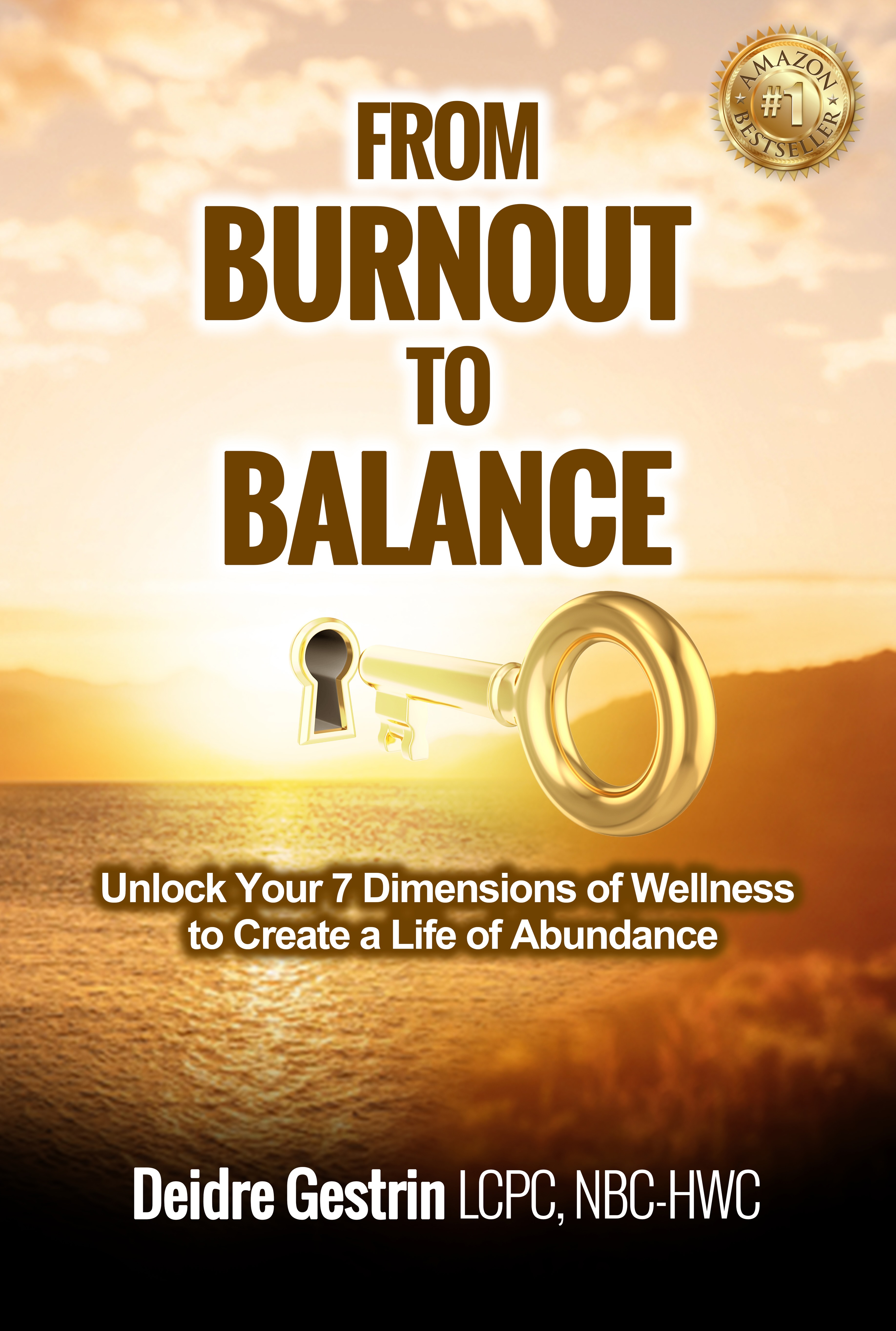
From Burnout to Balance: Unlock Your 7 Dimensions of Wellness to Create a Life of Abundance
Trusted Across Clinical and Organizational Settings
Experience includes behavioral health leadership with a focus on developing high-performing teams, strengthening workforce resilience, and enhancing clinical supervision.
Expertise in program design, system optimization, and telehealth enables scalable, efficient care delivery that supports both organizational performance and individual well-being.
Helping Professionals & Organizations Recover, Stabilize, and Perform Sustainbly
Healthcare professionals, executives, entrepreneurs, and high-achievers experiencing burnout, chronic stress, compassion fatigue, emotional exhaustion, loss of purpose, and work-life imbalance.
Healthcare and behavioral health organizations struggling with employee burnout, turnover, disengagement, unstable workforce performance, leadership strain, and rising operational costs.
High Pressure teams seeking healthier workplace culture, stronger communication, sustainable performance systems, leadership resilience, and workforce stability.
Burnout Recovery for High-Achieving Professionals
Burnout doesn't just affect your work.
It affects your energy, focus, relationships, sleep, health, and sense of purpose.

Through the The Sustainable Performance System™, professionals learn how to:
restore energy without stepping away from their career
regulate chronic stress and overwhelm
reconnect with purpose and clarity
create success without sacrificing their health or family
Organizational Burnout Consulting for Sustainable Workforce Performance
Burnout inside organizations leads to higher turnover, disengaged employees, leadership fatigue, increased insurance costs, and operational instability.

Through the The Sustainable Workforce System™, organizations learn how to:
strengthen leadership systems
improve team cohesion & reduce workforce burnout
stabilize operational performance
build healthier workplace culture
Real Results From Professionals & Organizations

"Deidre was able to help me get my clinical spark back!"
Beth Derickson
LCSW | Missouri

"I feel like I’m at a 90% success rate now."
Chris Grad
Business Owner, Entrepreneur | Idaho

"Deidre helped me get to the point where I am today."
Michelle Schmutzler
Psychiatric Tech Worker | Idaho
Sustainable Success Shouldn't Require Self-Sacrifice
Whether you're a professional trying to recover from burnout or an organization working to stabilize workforce performance, sustainable success is possible.
The Sustainable Performance System™
(Burnout Recovery for Professionals)
The Sustainable Workforce System™
(Organizational Consulting)
Don't Miss Out!
Workplace Burnout & Sustainable Performance Resources
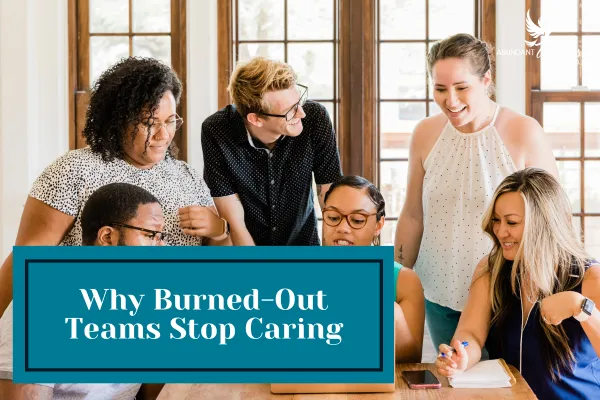
Why Burned-Out Teams Stop Caring
Why Burned-Out Teams Stop Caring and It's Not Motivation
Have you ever looked at your team and wondered, "What happened to them?"
Here's the truth, and I'm not going to sugarcoat it: most leaders assume disengagement means people just stopped caring, or worse, that they're unmotivated. Wrong diagnosis. People don't stop caring because they're bad employees. They stop caring because they've been caring too much, for too long, and nobody noticed.

Disengagement Isn't the Problem. It's a Symptom.
By the time you notice someone has pulled back, stopped sharing ideas, stopped speaking up in meetings, burnout already set in a while ago. Disengagement is rarely the first sign of trouble. It's the final one. That quiet, high-performing employee who used to bring you ideas every week? If they've gone quiet, workplace stress has likely already been chipping away at their capacity for months.
This is the cultural capacity equation at work again: when capacity declines long enough, engagement eventually follows it right out the door.
Ask yourself about your own team:
Are people contributing less than they used to?
Has enthusiasm noticeably declined?
Are employees doing the bare minimum instead of going above and beyond?
Has collaboration gotten harder?
If you're nodding along, you're not imagining it.
The Hospital, Part Two: Fixing the System Wasn't Enough
In my last post, I shared how we stabilized a psychiatric facility that couldn't get above 65% capacity. Once we restructured, staff started showing up. Crisis-mode faded. The work was getting done again. Success story, right?
Not quite yet. Because while the chaos had calmed, the people hadn't recovered. Initiative was still low. Collaboration was still strained. Leadership's first instinct was to assume it was a motivation problem, "why aren't people stepping up anymore?" But the real answer was harder to hear: people had been depleted for months before we ever changed the system, and fixing the structure doesn't automatically heal the humans inside it.
That's when we stopped focusing on motivation and started focusing on recovery. This is one of the most common mistakes I see organizations make: they implement one fix, see a small bump in energy, and assume the job is done. It isn't. Stabilizing an overwhelmed team is a process, not a single event.
The Early Warning Signs Nobody's Watching For
Here's what makes burnout so sneaky: it often develops while performance still looks strong. Your highest performers: the reliable ones, the yes-people, the ones who show up for everything; are frequently the ones quietly burning out the fastest, because they don't feel safe saying so out loud.
Watch for these early signs before disengagement fully sets in: declining enthusiasm, more frequent frustration, a drop in creativity and problem-solving, and a general sense of emotional exhaustion. The real question to ask isn't "are they doing okay?" - it's "are they really doing okay, or do they just appear to be?"
Why It's Self-Preservation, Not Laziness
When chronic stress takes hold, emotional exhaustion rises and hope declines. That once-hopeful employee who could always find the silver lining suddenly can't. Initiative dries up. People start protecting themselves, doing the minimum, avoiding extra responsibility, and emotionally checking out. You'll hear it in comments like "what I do doesn't matter." That one breaks my heart every time, because what they do absolutely matters.
Here's the important reframe for leaders: this isn't laziness. It's self-preservation. When the nervous system prioritizes survival over engagement, that's not a character flaw, that's biology. Chronic workplace stress triggers a fight-or-flight response, and survival always outranks enthusiasm.
Are You Accidentally Accelerating the Problem?
As leaders, our own behaviors can unintentionally speed up disengagement. Ask yourself honestly:
Is everything treated as chronically urgent, with no real prioritization?
Is there constant change with no sense of stability?
Are you forgetting to recognize your team's efforts, so their work starts to feel invisible?
Are expectations unclear, leaving people to sink-or-swim their way through onboarding or new responsibilities?
And here's the one that's hardest to admit: if you're a burnt-out leader, you may be invisibly burning out your team, too. One influences the other, always.
What Healthy Teams Actually Look Like
Healthy, engaged teams share a few consistent traits: psychological safety, realistic workloads, and leadership consistency people can count on. When capacity is high, people think clearly, solve problems creatively, and support each other. When capacity is low, people default to the bare minimum, not because they stopped caring, but because they can't access more.
One more thing worth questioning: your engagement surveys. Most only measure satisfaction and morale. Are you also asking about mental and emotional capacity, workload, stress load, and burnout risk? Because burnout begins long before someone tells you they're struggling. Often, you find out when they've already decided to leave.
If your team feels less engaged, less collaborative, or less invested than they used to be, don't assume they've stopped caring. Take the Organizational Burnout Assessment to identify your risk factors and workforce vulnerabilities before disengagement becomes a resignation letter.

As Seen In


© 2026 Abundant Wellness Essentials. All Rights Reserved.