Burnout Recovery Coach and Workforce Performance Consultant Across the United States
Recover From Burnout Without Sacrificing Success
Helping professionals recover from burnout and helping organizations reduce workplace burnout through sustainable performance strategies that support long-term success.
For Professionals
For Organizations
Consultant • Speaker • Author • Trainer
Trusted Across Healthcare, Behavioral Health & Organizational Leadership
Burnout is No Longer an Individual Problem - It's a Workforce Performance Crisis
High-achieving professionals are exhausted.
Organizations are losing experienced employees faster than they can replace them.
Leaders are being asked to maintain performance inside systems that are no longer sustainable.
Workplace burnout affects...
Employee retention.
Organizational culture.
Leadership capacity.
Healthcare costs.
Productivity.
Long-term workforce stability.
The traditional model of success - pushing harder, working harder, and sacrificing personal well-being is breaking people and weakening organizations.
Sustainable performance requires a different apprach.
Trusted Burnout Recovery & Workforce Performance Expert

Deidre Gestrin
Consultant, Speaker, Author, & Trainer
With over 20 years specializing in stress, trauma, burnout recovery, and behavioral health leadership, Deidre Gestrin helps professionals and organizations create sustainable performance without sacrificing health, purpose, and people.
Deidre is also the author of:
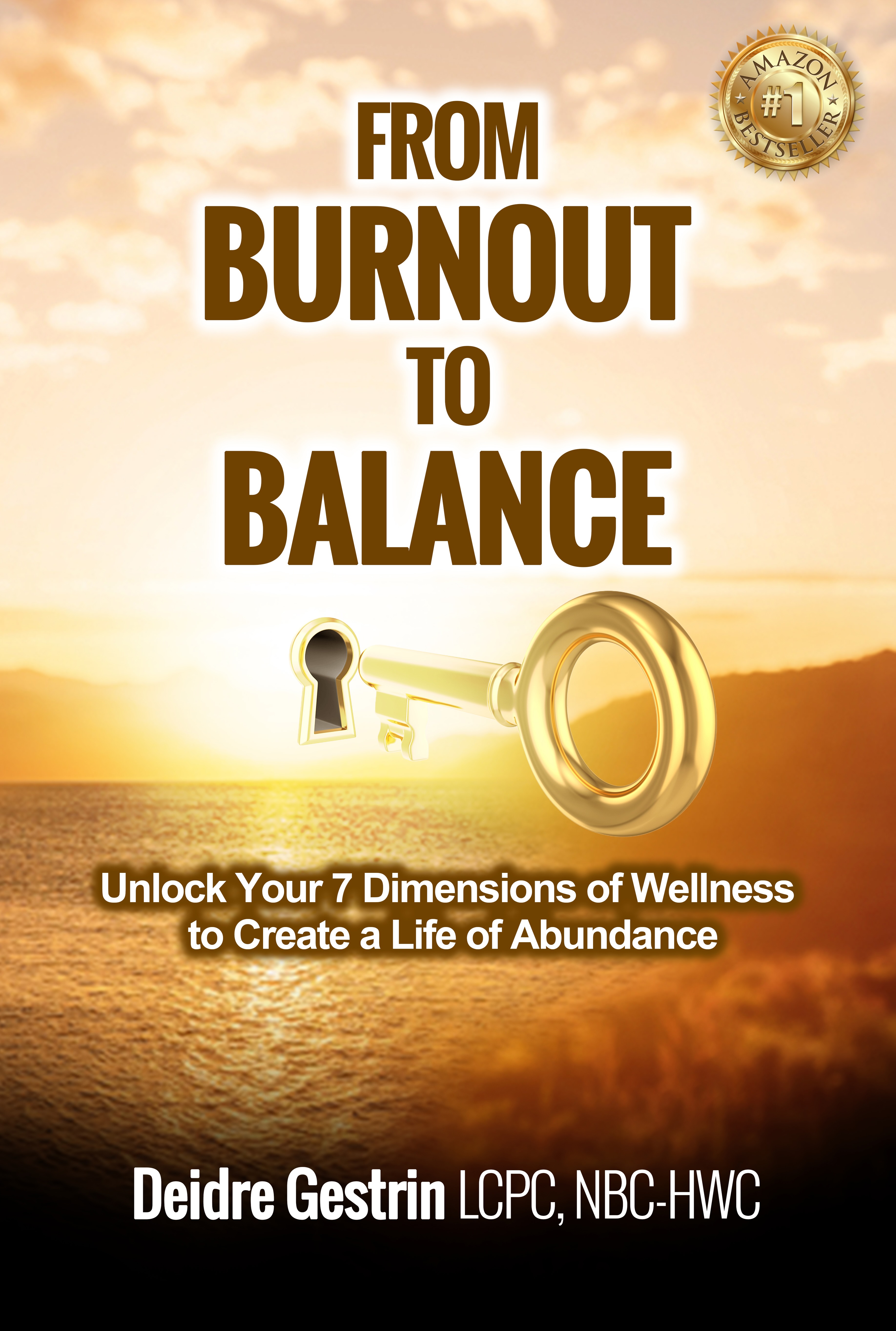
From Burnout to Balance: Unlock Your 7 Dimensions of Wellness to Create a Life of Abundance
Trusted Across Clinical and Organizational Settings
Experience includes behavioral health leadership with a focus on developing high-performing teams, strengthening workforce resilience, and enhancing clinical supervision.
Expertise in program design, system optimization, and telehealth enables scalable, efficient care delivery that supports both organizational performance and individual well-being.
Helping Professionals & Organizations Recover, Stabilize, and Perform Sustainbly
Healthcare professionals, executives, entrepreneurs, and high-achievers experiencing burnout, chronic stress, compassion fatigue, emotional exhaustion, loss of purpose, and work-life imbalance.
Healthcare and behavioral health organizations struggling with employee burnout, turnover, disengagement, unstable workforce performance, leadership strain, and rising operational costs.
High Pressure teams seeking healthier workplace culture, stronger communication, sustainable performance systems, leadership resilience, and workforce stability.
Burnout Recovery for High-Achieving Professionals
Burnout doesn't just affect your work.
It affects your energy, focus, relationships, sleep, health, and sense of purpose.

Through the The Sustainable Performance System™, professionals learn how to:
restore energy without stepping away from their career
regulate chronic stress and overwhelm
reconnect with purpose and clarity
create success without sacrificing their health or family
Organizational Burnout Consulting for Sustainable Workforce Performance
Burnout inside organizations leads to higher turnover, disengaged employees, leadership fatigue, increased insurance costs, and operational instability.

Through the The Sustainable Workforce System™, organizations learn how to:
strengthen leadership systems
improve team cohesion & reduce workforce burnout
stabilize operational performance
build healthier workplace culture
Real Results From Professionals & Organizations

"Deidre was able to help me get my clinical spark back!"
Beth Derickson
LCSW | Missouri

"I feel like I’m at a 90% success rate now."
Chris Grad
Business Owner, Entrepreneur | Idaho

"Deidre helped me get to the point where I am today."
Michelle Schmutzler
Psychiatric Tech Worker | Idaho
Sustainable Success Shouldn't Require Self-Sacrifice
Whether you're a professional trying to recover from burnout or an organization working to stabilize workforce performance, sustainable success is possible.
The Sustainable Performance System™
(Burnout Recovery for Professionals)
The Sustainable Workforce System™
(Organizational Consulting)
Don't Miss Out!
Workplace Burnout & Sustainable Performance Resources
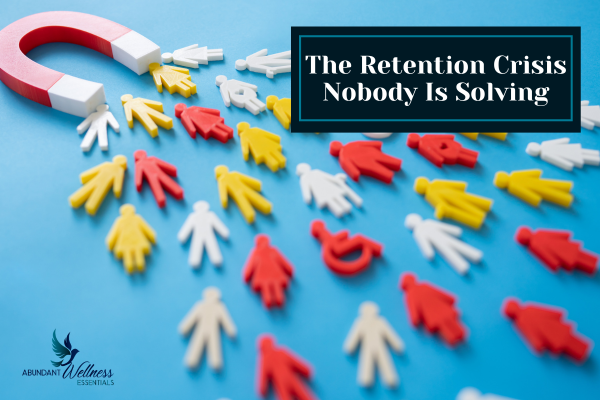
The Retention Crisis Nobody Is Solving
The Retention Crisis Nobody Is Solving (Hiring Faster Isn't the Fix)
If your organization keeps solving turnover by recruiting more people, you may be treating the symptom while leaving the actual reason your employees are leaving completely untouched.
Last week we talked about why good employees leave, even when they love the work. Today we're going deeper into why the cycle keeps repeating, and why hiring alone will never interrupt it.
The Turnover Cycle
On the surface, what leaders say constantly is, we need more people. Fair enough. But the question underneath that one matters more. Why can't you retain the people you hire in the first place? As leaders, we tend to pour effort into recruitment and training, while the actual cycle keeps playing out the same way every time. You have an open position, you fill it, you give them their workload after training, and then the workload keeps increasing. As the workload climbs, people start to feel exhausted. They start questioning how much longer they can keep doing this, whether the pace is sustainable. Some become cynical. Those are signs of burnout, and I've seen them constantly, including in my own career.
The statistics back this up. Fifty percent of employees report symptoms of burnout, and in some fields that number climbs closer to seventy percent. The statistic that doesn't get talked about enough is that roughly half of burnt out employees are already considering leaving. If someone is saying, I don't know how much longer I can keep doing this, I don't know if I'm in the right field, they have already started to disengage. They're already thinking about what else they could be doing, or where else they could go. That leads straight to turnover, which opens a new vacancy, which restarts the entire cycle. Hiring is important, because you genuinely need people to do the work. But hiring alone will not interrupt this cycle or improve retention. It will only perpetuate why people keep leaving.
The Sustainable Performance Gap
This is really why these turnover cycles keep happening. The performance gap is the distance between where your organization and your people are currently performing and where you actually want them to be. The more turnover you experience, the bigger that gap grows, especially when the cycle just keeps repeating unchecked. Organizations often know what healthy performance should look like, but don't always recognize that the work conditions themselves are what's making that performance difficult or impossible to sustain. It was never just about doing the work better or faster. It's about the support and systems that let people actually thrive while doing the work. This is exactly what I walk organizations through in the Sustainable Workforce Method™, using the SPARK Framework™ at its core.
Diagnosis Matters More Than Initiative
If we can't see the problem clearly, and we can't pinpoint the actual root cause, we end up with a perpetual turnover problem no matter how many initiatives we launch. The importance of diagnosing what's actually going on matters more than any single initiative, because the diagnosis is what should drive the initiative in the first place.
In the psychiatric hospital story I've shared before, our leadership meetings were constantly brainstorming solutions to what felt like a recruitment problem. For thirty days straight, the refrain was, we need to recruit faster. One nurse even asked whether we could bring in something like a traveling clinician. We couldn't, structurally and from a licensing standpoint it simply wasn't possible. But the real gap wasn't in our recruiting speed. It was that we weren't asking two crucial questions. What happens after we recruit them? And why do we have to keep recruiting in the first place?
Both questions matter, because recruiting costs real money, training people and getting them onboarded and up to speed takes real investment, and plenty of people don't even make it through training once they see what we saw ourselves. As leaders, we have to examine specific aspects of turnover directly. Why are employees actually leaving, and what do exit interviews repeatedly reveal? If people decline to do an exit interview at all, that refusal is information too, often because they don't believe their voice will change anything. Where are vacancies most concentrated, and how critical is that position to the organization's core function? What have employees quietly normalized? And have we actually acted on the feedback we've received, or just collected it?
What We Found Underneath
In the psychiatric hospital, employees had normalized treating every single day as a fire to put out, one crisis situation after another, just managing whatever came up in the moment. That pace is exhausting, physically unsafe at times, and emotionally draining when staff are repeatedly on the receiving end of difficult behaviors. That's exactly where vacancies kept opening up most, on the floor, in the roles absorbing the most crisis exposure.
As we kept exploring these questions, brainstorming and recognizing this pace genuinely wasn't sustainable, we identified the real root cause. The facility's structure simply wasn't effective for the issues the kids were coming in with, and executive leadership was leading from a place of fear rather than support and cooperation. That fear instilled fear in staff, and that is never healthy. Because of the constant urgency, staff couldn't sustain the pace, which meant urgent and emergent situations consistently overrode any sense of stability, for employees and for the people we were there to help.
Stop Treating It as a People Problem
I want you to sit with this: What would change if your organization stopped treating turnover as simply a people problem and started treating it as an operational one? Next week we're going even deeper into how this retention issue and these burnout symptoms translate directly into your bottom line as an organization. If any part of this sounds like what you're experiencing, take the Organizational Burnout Assessment to understand exactly how severe these symptoms are in your organization and what to do about them.

As Seen In


© 2026 Abundant Wellness Essentials. All Rights Reserved.