Burnout Recovery Coach and Workforce Performance Consultant Across the United States


Recover From Burnout Without Sacrificing Success
Helping professionals recover from burnout and helping organizations reduce workplace burnout through sustainable performance strategies that support long-term success.
For Professionals
For Organizations
Consultant • Speaker • Author • Trainer
Trusted Across Healthcare, Behavioral Health & Organizational Leadership
Burnout is No Longer an Individual Problem - It's a Workforce Performance Crisis
High-achieving professionals are exhausted.
Organizations are losing experienced employees faster than they can replace them.
Leaders are being asked to maintain performance inside systems that are no longer sustainable.
Workplace burnout affects...
Employee retention.
Organizational culture.
Leadership capacity.
Healthcare costs.
Productivity.
Long-term workforce stability.
The traditional model of success - pushing harder, working harder, and sacrificing personal well-being is breaking people and weakening organizations.
Sustainable performance requires a different apprach.
Trusted Burnout Recovery & Workforce Performance Expert

Deidre Gestrin
Consultant, Speaker, Author, & Trainer
With over 20 years specializing in stress, trauma, burnout recovery, and behavioral health leadership, Deidre Gestrin helps professionals and organizations create sustainable performance without sacrificing health, purpose, and people.
Deidre is also the author of:
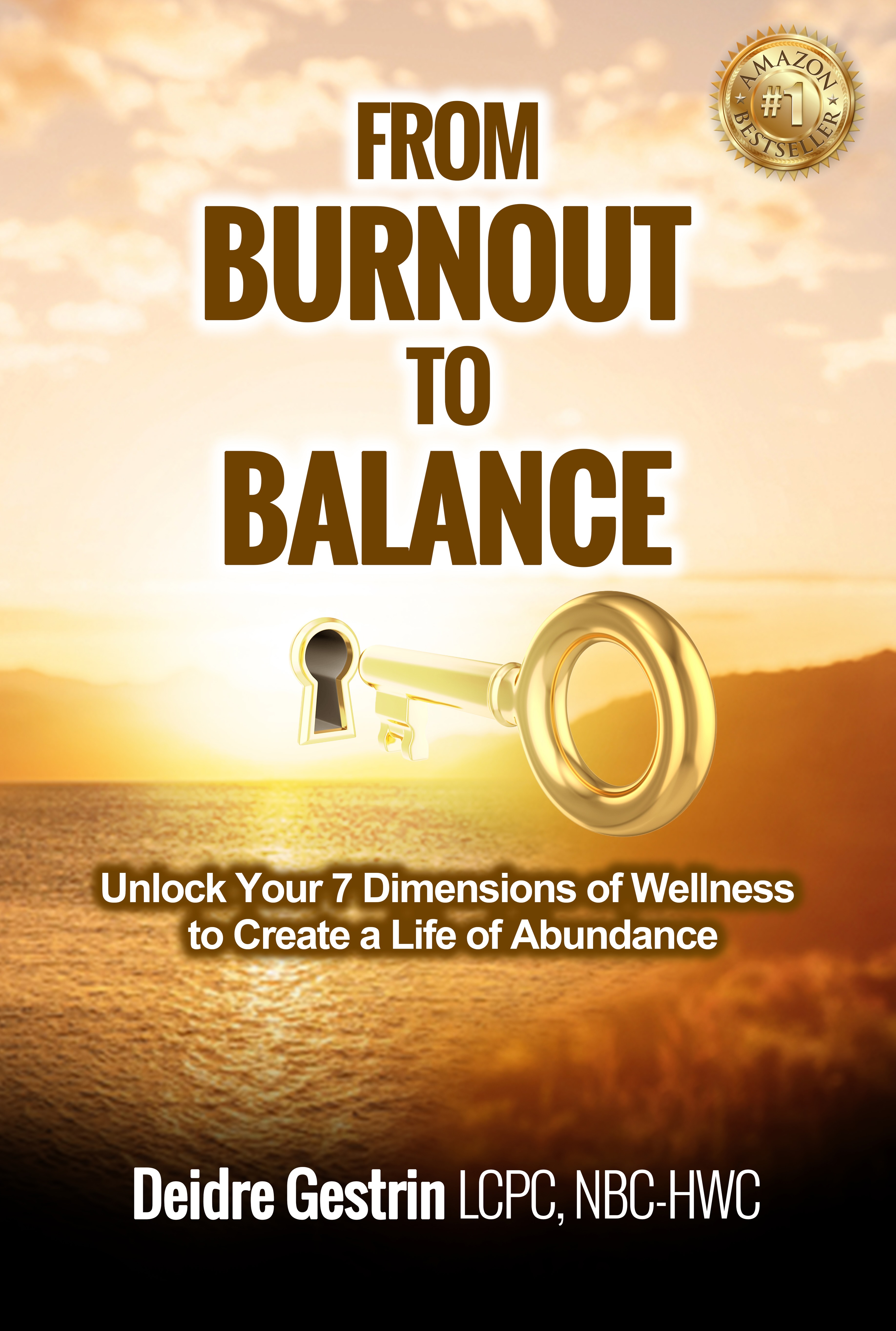
From Burnout to Balance: Unlock Your 7 Dimensions of Wellness to Create a Life of Abundance
Trusted Across Clinical and Organizational Settings
Experience includes behavioral health leadership with a focus on developing high-performing teams, strengthening workforce resilience, and enhancing clinical supervision.
Expertise in program design, system optimization, and telehealth enables scalable, efficient care delivery that supports both organizational performance and individual well-being.
Helping Professionals & Organizations Recover, Stabilize, and Perform Sustainbly
Healthcare professionals, executives, entrepreneurs, and high-achievers experiencing burnout, chronic stress, compassion fatigue, emotional exhaustion, loss of purpose, and work-life imbalance.
Healthcare and behavioral health organizations struggling with employee burnout, turnover, disengagement, unstable workforce performance, leadership strain, and rising operational costs.
High Pressure teams seeking healthier workplace culture, stronger communication, sustainable performance systems, leadership resilience, and workforce stability.
Burnout Recovery for High-Achieving Professionals
Burnout doesn't just affect your work.
It affects your energy, focus, relationships, sleep, health, and sense of purpose.

Through the The Sustainable Performance System™, professionals learn how to:
restore energy without stepping away from their career
regulate chronic stress and overwhelm
reconnect with purpose and clarity
create success without sacrificing their health or family
Organizational Burnout Consulting for Sustainable Workforce Performance
Burnout inside organizations leads to higher turnover, disengaged employees, leadership fatigue, increased insurance costs, and operational instability.

Through the The Sustainable Workforce System™, organizations learn how to:
strengthen leadership systems
improve team cohesion & reduce workforce burnout
stabilize operational performance
build healthier workplace culture
Real Results From Professionals & Organizations

"Deidre was able to help me get my clinical spark back!"
Beth Derickson
LCSW | Missouri

"I feel like I’m at a 90% success rate now."
Chris Grad
Business Owner, Entrepreneur | Idaho

"Deidre helped me get to the point where I am today."
Michelle Schmutzler
Psychiatric Tech Worker | Idaho
Sustainable Success Shouldn't Require Self-Sacrifice
Whether you're a professional trying to recover from burnout or an organization working to stabilize workforce performance, sustainable success is possible.
The Sustainable Performance System™
(Burnout Recovery for Professionals)
The Sustainable Workforce System™
(Organizational Consulting)
Don't Miss Out!
Workplace Burnout & Sustainable Performance Resources

How to Emotionally Detox After a Hard Day at Work
How to Emotionally Detox After a Hard Shift at Work
Emotionally detoxing after a hard shift can feel impossible, but it's absolutely doable. And if you're a high-achieving professional carrying workplace stress home night after night, this skill isn't a luxury. It's essential for your long-term emotional health.
You know the feeling. You leave work, but your mind doesn't. You're trying to make dinner, help with homework, or finally sit down for five minutes, and that difficult conversation from 2 p.m. is still playing on repeat in your head. The meeting that didn't go well. The email you're already drafting in your mind for tomorrow morning.
For those of you who work from home, the lack of separation makes this even harder. There's no commute, no parking lot, no physical doorway between "work you" and "home you."
This is what emotional residue looks like and it's one of the most overlooked drivers of workplace burnout.
Why Workplace Stress Lingers Long After You Clock Out
Here's what's happening in your brain and body when stress from work won't let you go.
Your brain is still processing the day. When you experience something stressful, your brain continues working on it long after the event ends. It's the same mechanism that causes nightmares after a traumatic experience, your brain is trying to understand what happened, file it into long-term memory, and release the emotional charge attached to it. So when you can't stop replaying that interaction with your supervisor, your brain isn't malfunctioning. It's working overtime trying to integrate the experience.
Your stress response is still activated. A difficult shift activates your fight-or-flight response. Cortisol levels rise. Your nervous system shifts into high alert. And that biological response doesn't simply switch off the moment you walk out of the building. The emotional reactivations you experienced throughout the day are still active in your body when you get home.
This is why willpower alone doesn't work. You can't think your way out of a physiological stress response. Without intentional recovery, the emotional stress from work accumulates, and that accumulation is what drives chronic workplace burnout over time.
Signs You Need an Emotional Reset
If any of these resonate, your body is signaling that it needs intentional recovery:
You can't disconnect from work at the end of the day
You walk in the door and immediately feel irritable with your family
You snap at your kids, partner, or pets over small things
You can't relax or your body feels jittery when you try to sit still
You can't fall asleep, or your mind races when you lay down
You're stuck in persistent mental replay of work situations
These aren't character flaws. They're symptoms of emotional exhaustion that needs a cure, not more pushing through.
Practical Strategies to Reset After a Hard Shift
The goal here isn't a 30-minute elaborate routine. I'll be honest with you: if I gave you a complex plan requiring half an hour every evening, you wouldn't do it. I've seen this play out with clients for years. What actually works is small and doable.
1. Build a transitional ritual between work and home. The window between leaving work and arriving home is gold. If you have a 15–20 minute commute, use it intentionally, listen to a podcast that has nothing to do with your industry, play music that resets your mood, or drive in silence. This signals to your brain: now is the time to process.
2. Use micro-rituals when you only have a few minutes. If your commute is only five minutes, sit in your car for 30 seconds before walking inside. Take three slow, deep breaths down into your belly. That's it. Your body learns to associate that pause with release.
3. Move your body to release cortisol. A short walk, even 10 minutes around the block, helps your body metabolize the stress hormones still circulating from your workday. Bring the family along if that works, or take it solo if you need the space.
4. Try a brief reflection or journaling practice. For some people, getting the day out of their head and onto paper is what creates the release. Three sentences is enough. You don't need a leather-bound journal or a Pinterest-worthy practice.
5. Communicate with your family about what you need. Five minutes versus 30 makes a real difference. Let the people you love know you need a short transition window before you're fully present with them. That conversation alone protects your relationships.
Why Emotional Recovery Matters for Long-Term Health
Emotional recovery isn't separate from sustainable work. It is sustainable work.
When you build in recovery, three things change. First, your evenings get better, you're actually present with the people you love instead of mentally still at work. Second, you start the next day with clarity and energy rather than residual fatigue. Third, you interrupt the accumulation of long-term stress and emotional health damage that fuels chronic workplace burnout.
You also protect the relationships outside of work that matter most. Unresolved workplace stress doesn't stay at work, it leaks into how you show up with your partner, your kids, your friends. Recovery tools are how you keep that from happening.
Your Next Step
If this resonates and you're wondering where to begin, start with just one strategy. Pick the one that feels most doable. Try it for a week. Notice what shifts.
And if your life feels too chaotic to figure this out alone, I'd love to connect. Schedule a free consultation here and we'll identify one small step you can take to start feeling the shift.
Because emotional recovery isn't a reward you earn after burnout. It's how you prevent it.

As Seen In


© 2026 Abundant Wellness Essentials. All Rights Reserved.