Burnout Recovery Coach and Workforce Performance Consultant Across the United States


Recover From Burnout Without Sacrificing Success
Helping professionals recover from burnout and helping organizations reduce workplace burnout through sustainable performance strategies that support long-term success.
For Professionals
For Organizations
Consultant • Speaker • Author • Trainer
Trusted Across Healthcare, Behavioral Health & Organizational Leadership
Burnout is No Longer an Individual Problem - It's a Workforce Performance Crisis
High-achieving professionals are exhausted.
Organizations are losing experienced employees faster than they can replace them.
Leaders are being asked to maintain performance inside systems that are no longer sustainable.
Workplace burnout affects...
Employee retention.
Organizational culture.
Leadership capacity.
Healthcare costs.
Productivity.
Long-term workforce stability.
The traditional model of success - pushing harder, working harder, and sacrificing personal well-being is breaking people and weakening organizations.
Sustainable performance requires a different apprach.
Trusted Burnout Recovery & Workforce Performance Expert

Deidre Gestrin
Consultant, Speaker, Author, & Trainer
With over 20 years specializing in stress, trauma, burnout recovery, and behavioral health leadership, Deidre Gestrin helps professionals and organizations create sustainable performance without sacrificing health, purpose, and people.
Deidre is also the author of:
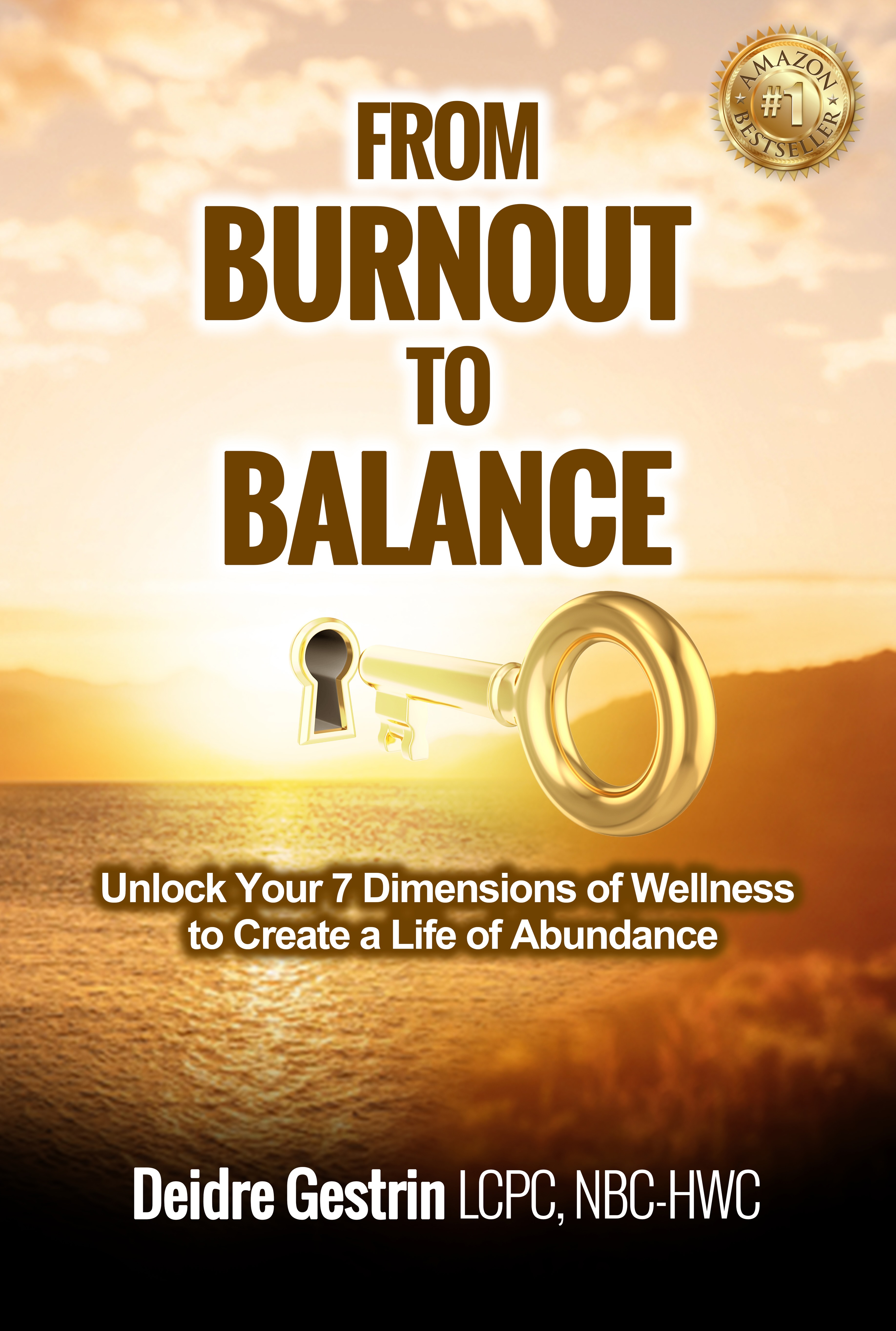
From Burnout to Balance: Unlock Your 7 Dimensions of Wellness to Create a Life of Abundance
Trusted Across Clinical and Organizational Settings
Experience includes behavioral health leadership with a focus on developing high-performing teams, strengthening workforce resilience, and enhancing clinical supervision.
Expertise in program design, system optimization, and telehealth enables scalable, efficient care delivery that supports both organizational performance and individual well-being.
Helping Professionals & Organizations Recover, Stabilize, and Perform Sustainbly
Healthcare professionals, executives, entrepreneurs, and high-achievers experiencing burnout, chronic stress, compassion fatigue, emotional exhaustion, loss of purpose, and work-life imbalance.
Healthcare and behavioral health organizations struggling with employee burnout, turnover, disengagement, unstable workforce performance, leadership strain, and rising operational costs.
High Pressure teams seeking healthier workplace culture, stronger communication, sustainable performance systems, leadership resilience, and workforce stability.
Burnout Recovery for High-Achieving Professionals
Burnout doesn't just affect your work.
It affects your energy, focus, relationships, sleep, health, and sense of purpose.

Through the The Sustainable Performance System™, professionals learn how to:
restore energy without stepping away from their career
regulate chronic stress and overwhelm
reconnect with purpose and clarity
create success without sacrificing their health or family
Organizational Burnout Consulting for Sustainable Workforce Performance
Burnout inside organizations leads to higher turnover, disengaged employees, leadership fatigue, increased insurance costs, and operational instability.

Through the The Sustainable Workforce System™, organizations learn how to:
strengthen leadership systems
improve team cohesion & reduce workforce burnout
stabilize operational performance
build healthier workplace culture
Real Results From Professionals & Organizations

"Deidre was able to help me get my clinical spark back!"
Beth Derickson
LCSW | Missouri

"I feel like I’m at a 90% success rate now."
Chris Grad
Business Owner, Entrepreneur | Idaho

"Deidre helped me get to the point where I am today."
Michelle Schmutzler
Psychiatric Tech Worker | Idaho
Sustainable Success Shouldn't Require Self-Sacrifice
Whether you're a professional trying to recover from burnout or an organization working to stabilize workforce performance, sustainable success is possible.
The Sustainable Performance System™
(Burnout Recovery for Professionals)
The Sustainable Workforce System™
(Organizational Consulting)
Don't Miss Out!
Workplace Burnout & Sustainable Performance Resources
Chronic Stress and the Nervous System: How to Recover
Blog Post: Why Your Nervous System Is Fried And How to Help It Recover
Do you ever wonder why you constantly feel jittery, on edge, or like you can't quite catch your breath, even when nothing is technically "wrong"?
That feeling isn't in your head. It's in your nervous system.
If you've been running on adrenaline for months or years, your body is sending you signals that something has to change. Let's talk about what's actually happening inside you and what you can do about it.
How Stress Affects the Nervous System
Your nervous system runs throughout your entire body and regulates how your mind and body respond to stress. It takes in information from everything you see, hear, smell, touch, and taste and then decides whether you're safe.
Here's the thing: when stress becomes chronic, your nervous system stays constantly activated. Your body wasn't designed for that. So as you jump from one stressful situation to the next, your nervous system is essentially saying, "Wait a minute, why am I always activated? This does not feel safe. What is going on?"
Your body just wants to feel safe again.
What Long-Term Stress Does to the Body
When you experience stress, your body recognizes it the same way it would a traumatic event or an accident. Your fight-or-flight response kicks in, and you might notice:
Increased heart rate
Heightened alertness
A surge of adrenaline that says, "I need to get out of here"
That activation is supposed to be short-term. Your nervous system assesses the threat, gets you out of the situation, and then you recover. That's the design.
But chronic stress flips this on its head. Your nervous system stays activated. Your recovery periods get shorter, or disappear entirely. I hear it from clients in my coaching program all the time: "Deidre, I can't calm my body. I feel like my nervous system is fried."
The Burnout Cycle: Why You Can't Just "Push Through"
Here's what nervous system health looks like when chronic stress takes over:
Emotional dysregulation. You feel reactive. Maybe it comes out as anger, or your emotions feel all over the place. That's because your body isn't in a calm state long enough to process anything.
Fatigue and irritability. Adrenaline is meant to be a short-term energy source. When it's constantly being used, your body depletes the energy it needs to digest food, reduce inflammation, and recover. You're running on empty.
Reduced performance at work. Tasks that used to take 20 minutes are now taking an hour. You're noticing more conflict with coworkers (whether you started it or not). Your resilience, your ability to bounce back from challenges, has been depleted.
Difficulty making decisions. If you're a leader who's usually the go-to for clarity, and suddenly you're struggling to make calls you'd normally make in your sleep, your nervous system has been activated for too long.
This is the burnout cycle, and pushing harder won't break it. In fact, it deepens it.
How to Support Your Nervous System, Without Taking Two Weeks Off
Here's what I walk clients through:
1. Create predictable work rhythms you can sustain. Your mind and body are systematic, they love rhythm. Most people resist change, but the right kind of change creates the consistency your nervous system craves.
2. Build in rest and recovery (the realistic kind). A lot of high performers think rest means taking two consecutive weeks off. For some people, that works. For others, it actually triggers more alarm bells. Instead, think micro habits, 2 to 5 minutes built into your day that let your brain and body exhale.
3. Move your body. When your nervous system stays activated, it floods your body with cortisol. Physical movement is one of the best ways to release it. You don't have to be a runner. Any movement counts.
4. Slow down your breathing. When your nervous system gets activated, you stop breathing deeply. Slow, deep breaths, especially slow exhales, signal to your nervous system that it's safe to relax again.
5. If you lead, reduce unnecessary pressure. Leadership isn't just about adding to the workload. It's about creating environments where nervous systems can regulate.
You Can Recover From This
Your nervous system isn't broken. It's been doing its job, maybe a little too well, for a little too long. The good news is that the same system that learned to live in overdrive can learn to come back down.
It takes intention, the right rhythms, and a little patience with yourself.
If you're ready to start, I created a free guide called Stress to Peace with my top go-to practices for calming your nervous system. Clients who try them tell me they feel a difference within two weeks. Grab it below:

As Seen In


© 2026 Abundant Wellness Essentials. All Rights Reserved.