Burnout Recovery Coach and Workforce Performance Consultant Across the United States
Recover From Burnout Without Sacrificing Success
Helping professionals recover from burnout and helping organizations reduce workplace burnout through sustainable performance strategies that support long-term success.
For Professionals
For Organizations
Consultant • Speaker • Author • Trainer
Trusted Across Healthcare, Behavioral Health & Organizational Leadership
Burnout is No Longer an Individual Problem - It's a Workforce Performance Crisis
High-achieving professionals are exhausted.
Organizations are losing experienced employees faster than they can replace them.
Leaders are being asked to maintain performance inside systems that are no longer sustainable.
Workplace burnout affects...
Employee retention.
Organizational culture.
Leadership capacity.
Healthcare costs.
Productivity.
Long-term workforce stability.
The traditional model of success - pushing harder, working harder, and sacrificing personal well-being is breaking people and weakening organizations.
Sustainable performance requires a different apprach.
Trusted Burnout Recovery & Workforce Performance Expert

Deidre Gestrin
Consultant, Speaker, Author, & Trainer
With over 20 years specializing in stress, trauma, burnout recovery, and behavioral health leadership, Deidre Gestrin helps professionals and organizations create sustainable performance without sacrificing health, purpose, and people.
Deidre is also the author of:
From Burnout to Balance: Unlock Your 7 Dimensions of Wellness to Create a Life of Abundance
Trusted Across Clinical and Organizational Settings
Experience includes behavioral health leadership with a focus on developing high-performing teams, strengthening workforce resilience, and enhancing clinical supervision.
Expertise in program design, system optimization, and telehealth enables scalable, efficient care delivery that supports both organizational performance and individual well-being.
Helping Professionals & Organizations Recover, Stabilize, and Perform Sustainbly
Healthcare professionals, executives, entrepreneurs, and high-achievers experiencing burnout, chronic stress, compassion fatigue, emotional exhaustion, loss of purpose, and work-life imbalance.
Healthcare and behavioral health organizations struggling with employee burnout, turnover, disengagement, unstable workforce performance, leadership strain, and rising operational costs.
High Pressure teams seeking healthier workplace culture, stronger communication, sustainable performance systems, leadership resilience, and workforce stability.
Burnout Recovery for High-Achieving Professionals
Burnout doesn't just affect your work.
It affects your energy, focus, relationships, sleep, health, and sense of purpose.

Through the The Sustainable Performance System™, professionals learn how to:
restore energy without stepping away from their career
regulate chronic stress and overwhelm
reconnect with purpose and clarity
create success without sacrificing their health or family
Organizational Burnout Consulting for Sustainable Workforce Performance
Burnout inside organizations leads to higher turnover, disengaged employees, leadership fatigue, increased insurance costs, and operational instability.

Through the The Sustainable Workforce System™, organizations learn how to:
strengthen leadership systems
improve team cohesion & reduce workforce burnout
stabilize operational performance
build healthier workplace culture
Real Results From Professionals & Organizations

"Deidre was able to help me get my clinical spark back!"
Beth Derickson
LCSW | Missouri

"I feel like I’m at a 90% success rate now."
Chris Grad
Business Owner, Entrepreneur | Idaho

"Deidre helped me get to the point where I am today."
Michelle Schmutzler
Psychiatric Tech Worker | Idaho
Sustainable Success Shouldn't Require Self-Sacrifice
Whether you're a professional trying to recover from burnout or an organization working to stabilize workforce performance, sustainable success is possible.
The Sustainable Performance System™
(Burnout Recovery for Professionals)
The Sustainable Workforce System™
(Organizational Consulting)
Don't Miss Out!
Workplace Burnout & Sustainable Performance Resources
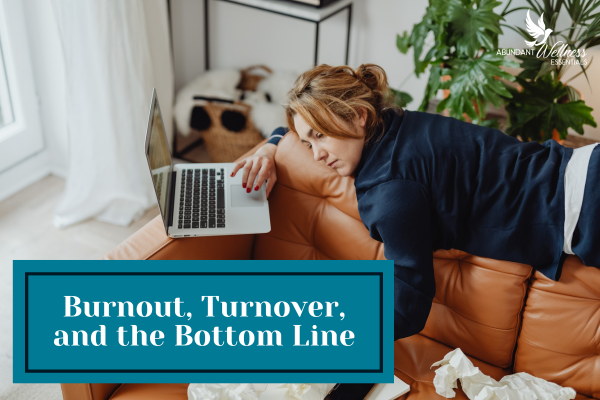
Burnout, Turnover, and the Bottom Line
Burnout, Turnover, and the Bottom Line (The Math Nobody's Doing)
Burnout doesn't stay inside your employees. Eventually, it shows up in staffing, productivity, quality, and capacity, and eventually, your bottom line.
Leaders often understand that turnover costs money, but we don't usually go beyond that surface level math. Today I want to go further and talk about why turnover keeps happening in the first place, and what the full escalation process actually looks like.
How Chronic Stress Escalates
Chronic stress happens when we're responding to one urgent situation after another, when everything feels urgent and people are demanding a response right now. There's a time and place for real urgency. But the longer we as individuals stay in this state, our bodies shift into survival mode, because the nervous system can't tell a real threat from a perceived one, and a lot of these urgent situations are perceived rather than genuinely urgent. Chronic stress keeps us elevated, constantly looking over our shoulder for the next thing to show up. The longer we expect employees to function in that state, we start seeing clear patterns.
Absenteeism climbs. Are people calling out more? Are they using their time off as fast as it accrues instead of building up a real PTO bank? This happens because prolonged chronic stress and burnout change the body physically, showing up as inflammation and illness. If you have an employee who used to never call out and never get sick, it's worth exploring whether chronic stress, and your own operations, have been driving that shift.
The Capacity Spiral
When employees are constantly absent, they also have less capacity when they are at work. Reduced capacity plus the same workload means output drops, quality drops, or both, because a lack of focus is itself a symptom of chronic stress. When one employee's capacity issues or absences start straining the rest of the team, teams become cynical and negative. People start asking why so and so is never at work, or why they always have to pick up the extra load. I've heard these exact questions before. That resentment is where people start questioning whether they're in the right company at all, and whether they need to move on.
That's exactly what drives turnover. People give up believing the problem will ever get solved, so they leave, which means you now have to put money and effort into recruiting, training, and onboarding, all of which is costly. Your operational capacity drops further, because the effort and finances going toward stabilizing a vacancy aren't going toward what actually moves the business mission forward. That's precisely where it hits your financial bottom line. The more money flowing into training and stabilization, the less flowing into growth, and you simply won't see the numbers move into the black.
The Performance Paradox
So what do you actually do with this information? This is where we have to explore what I call the performance paradox. Organizations often see performance falling and respond by demanding more output. But you cannot demand higher output from a system and a workforce that's already depleted. More pressure leads to a loss of sustainable capacity, which has no actual sustainability built into it. That decline in capacity leads to a decline in performance, which then triggers even more pressure. Putting more pressure on an already exhausted employee will not solve the problem. We have to work on the operations themselves, on what actually builds capacity and makes performance sustainable. That's exactly what we work on in the Sustainable Performance Method Program.
The Outcome at the Psychiatric Hospital
In the hospital I've shared about throughout this series, maximum capacity was 92 beds, and we could never exceed 60 because of everything we were experiencing, including an admissions restriction from the state and constant workforce instability. We couldn't retain staff fast enough, and we were perpetually jumping from one crisis to the next. That caused a genuine loss in revenue, with the numbers going into the red, a significant financial implication by any measure.
But here's what changed once we addressed the root causes. The admission restrictions were eventually lifted, and things stabilized because we stopped operating in constant crisis mode, by changing the operations themselves. We refocused on our actual mission, for example, recognizing that kids were there for treatment, not school, even though they still attended school and earned their credits because they had to. The focus shifted to treatment and helping them succeed enough to return to a public school system, and that shift came directly from changing operations and rebuilding team culture, not from working anyone harder.
Calculating the Real Cost
I want to encourage you to calculate how burnout is impacting your organization beyond turnover alone. If employees are losing capacity, you need to rebuild what's expected of them, because capacity declines further when people are expected to do more, and working longer hours only perpetuates the problem rather than solving it.
Ask yourself honestly whether you're paying more in overtime, because if people are staying longer to finish work, you're likely paying for hours where exhaustion is preventing them from actually getting it done. An exhausted brain needs time to repair, not more hours at a desk. If people are calling out more than they used to, or getting sick more than they used to, that's a bigger issue than simple turnover. And if you can't keep a full roster because vacancies keep reopening, that's a clear signal of an operational problem, not a recruiting one.
Calculate what you're actually spending on recruitment, onboarding, and training, and what those constant vacancies are truly costing you. Look at reduced productivity as output versus hours, not just hours worked. Ask whether paying more in overtime is genuinely more productive, or whether supporting people within their actual hours, reducing overtime, and adjusting workloads would increase productivity instead. And consider the operational disruption underneath it all. Is the work driving toward the company's mission, or is it just busy work people are grinding through? We interchange those two constantly, and they are never the same thing.
If burnout is affecting both your people and your performance, the real question becomes what leaders can actually do about it, and that's exactly where we're headed next. If you want to explore how this is impacting your organization's finances specifically, check out the Workplace Burnout and the Bottom Line paper. You shouldn't have to sacrifice your top talent. Employee output should drive toward the mission, not toward overtime and exhaustion.

As Seen In



© 2026 Abundant Wellness Essentials. All Rights Reserved.