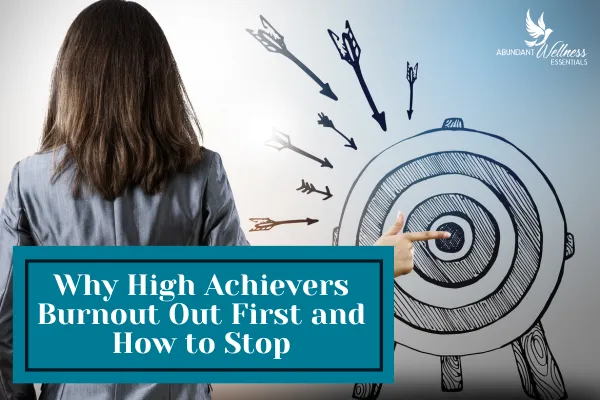
Why High Achievers Burn Out First and How to Stop
Why Success Still Feels Exhausting: The High-Achiever Burnout Trap
Here's an uncomfortable truth: workplace burnout doesn't target lazy people. It targets the committed ones. The dependable ones. The ones who say yes, get it done, and never let the team down.
Sound familiar? If you're a high-achieving leader wondering why success still feels exhausting, you're not broken, you're caught in a pattern, and patterns can be changed.
The High Achiever's Burnout Trap
I worked with a medical director overseeing multiple sites, always available, never fully "off," even on her days away from work. She loved her job. That's important to note, because loving your work doesn't make you immune to burnout. It can actually make you more vulnerable to it.
She told me what I hear from clients constantly: "I know this is what I'm supposed to do, but I don't know if I can keep going. This isn't what I expected."
That's not failure. That's the burnout cycle, chronic stress stacked on chronic stress, with no real recovery in between.
Why High Achievers Burn Out First
A few traits make high achievers especially prone to long-term stress and exhaustion:
A strong, sometimes oversized, sense of responsibility
Perfectionist standards that keep moving the goalpost
Difficulty delegating, because delegating feels like losing control
Identity fused with achievement, output becomes self-worth
These aren't flaws. They're strengths gone unmanaged. But left unchecked, they overextend you until exhaustion becomes your baseline.
Recognizing the Warning Signs
Burnout destroys your purpose quietly, hiding behind your to-do list. Watch for:
Cynicism creeping into work or relationships
Emotional numbness, that loss of empathy you used to lean on
Brain fog and trouble making decisions
Irritability that doesn't match your usual patience
A nagging sense that you've lost your "why"
The Way Out: The SPARK Method
Overcoming exhaustion and burnout doesn't require an overhaul, it requires a process. That's exactly why I built the SPARK Method: see the problem clearly, pinpoint the root cause, activate small sustainable changes, and reinforce them with systems that hold up under pressure.
You don't need to white-knuckle your way through workplace stress. You need a map.
Your Next Step
If anything here sounds like your Tuesday, start where every SPARK journey starts: awareness. Take the free Organizational Burnout Assessment and find out exactly where you stand.